
What the Oneida County Current Owner Record Shows
Every Oneida County record you pull has a source date, a municipality, a tax-map identifier, and a coverage limit. Read those first. The assessment roll may answer one question. The newest recorded instrument answers another. When a dynamic portal or an older volume is not online, the office route still works.
| Owner of Record | Official county record field, subject to the source date and stated coverage |
|---|---|
| Vesting / Tenancy | Official county record field, subject to the source date and stated coverage |
| Mailing Address | Official county record field, subject to the source date and stated coverage |
| Situs Address | Official county record field, subject to the source date and stated coverage |
| Deed Reference | Official county record field, subject to the source date and stated coverage |
| Ownership Since | Official county record field, subject to the source date and stated coverage |
Treat each Oneida County entry as a snapshot with a date attached. The municipality and tax-map identifier anchor it to one parcel. Coverage limits decide what is online. Compare the assessment roll against the latest recorded instrument. When a portal or older volume is out of reach, use the office route.
Confirming the Current Owner in Oneida County
A current-owner answer in Oneida County depends on three anchors: the source date and the municipality. The third anchor is the tax-map identifier. Online coverage has limits. So weigh the assessment roll against the newest recorded instrument. Where a dynamic portal is missing online, the office route fills the gap. The same holds for an old deed volume.
- Record the exact address, municipality, tax-map number, source date and document reference before moving to the next official source.
- Record the exact address, municipality, tax-map number, source date and document reference before moving to the next official source.
- Record the exact address, municipality, tax-map number, source date and document reference before moving to the next official source.
- Record the exact address, municipality, tax-map number, source date and document reference before moving to the next official source.
- Owner of record
- The person, trust, estate or entity named on the dated roll.
- Vesting
- The deed language showing individual, joint, trust or entity vesting.
- Registered agent
- The state entity record may show status and a service address.
March 1 and the Oneida County Owner Snapshot
The owner of record on a final assessment roll carries two dates. One is the roll year. The other is New York's March 1 taxable-status date. A sale recorded after March 1 can leave the public roll behind. It can lag a full cycle behind the deed index. Oneida County publishes no average lag figure. Note both dates. When the roll and the newest deed disagree, call the roll the dated assessment owner and the deed the later recorded conveyance. Never pick one silently, and never claim either one identifies an occupant.
Mailing Address Is Not Oneida County Situs
The roll separates property location from the owner's mailing address. Mail can go to a post office box. It can also go to another county, a management office, a trust, or a tax-payment address. None of that tells you where the owner lives. When the owner is a company, keep the exact entity spelling. Check the New York entity record for status and service information. The deed still controls how the grantee is vested. A business filing can never replace the parcel's legal description.
Oneida County Filing Alerts Protect the Present Record
The IQS Fraud Alert covers up to three monitored names and sends email or text notice when a matching recording appears. The Clerk now reports conveyance notices daily, replacing a monthly delivery practice used in 2023. Include trust or related ownership names where appropriate. A notice only signals that a document was indexed. Open the image, compare grantor, grantee, and legal description, then contact the County Clerk or counsel if a filing looks unfamiliar.
Check the Current Owner Against IQS
The Oneida County IQS landing screen is the official guest route for this check. Use it to confirm a roll owner against the newest deed.
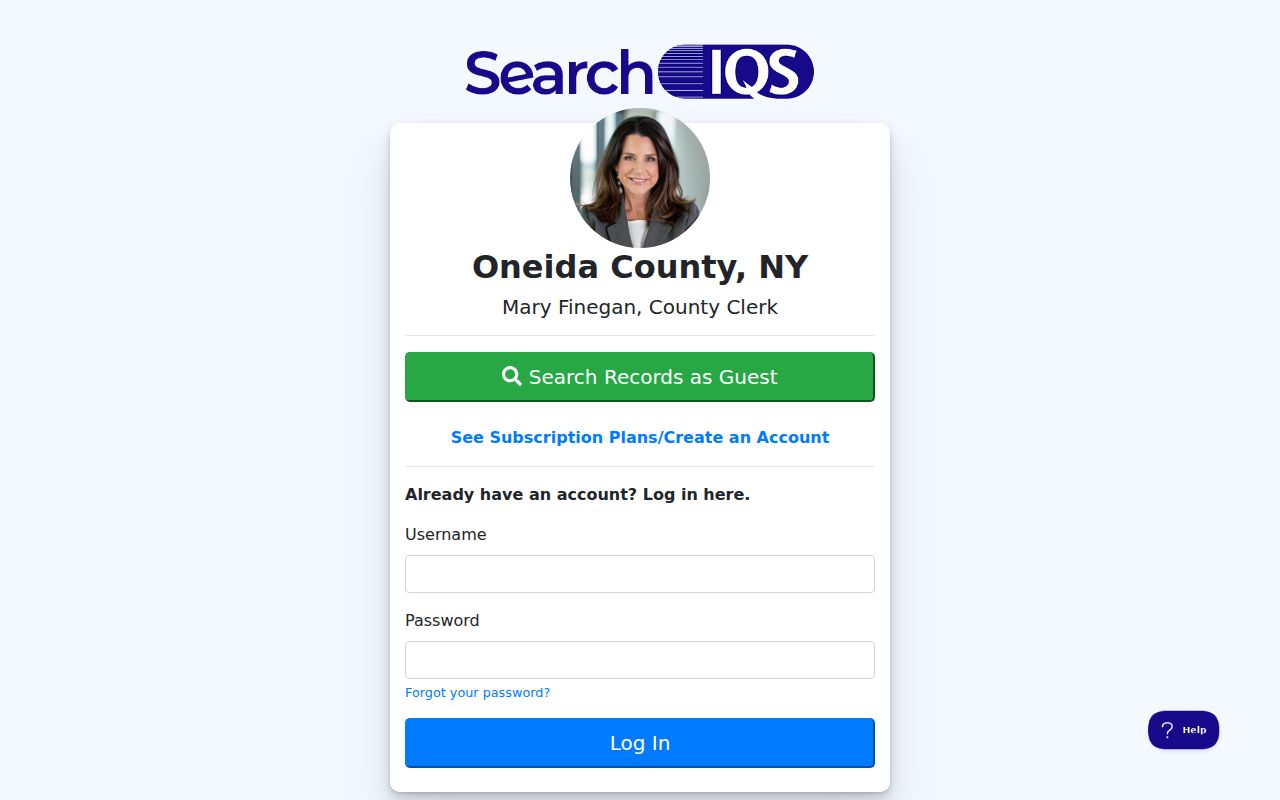
The landing page alone settles nothing. The recording date and legal description on the selected deed are what show whether the current-owner records agree.
Reaching a Oneida County Property Owner
Reaching an owner starts with the same discipline. Check the source date, the municipality, and the tax-map identifier on every Oneida County record. Compare the assessment roll with the latest recorded instrument before you write. A dynamic portal or an older volume may not be online. The office route is then the reliable one.
Lawful use. Use public records for legitimate property research. Do not use owner data to target, threaten or harass anyone.